

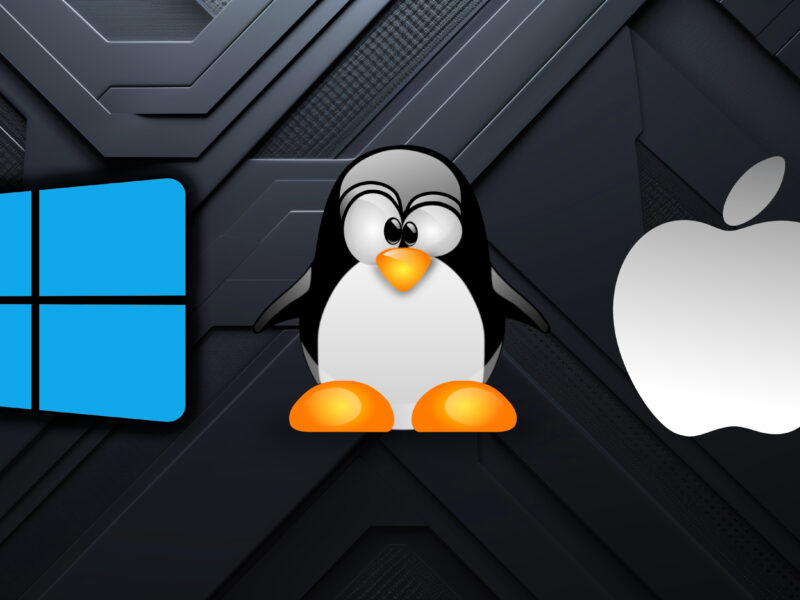
Choosing the right operating system for your business is a key IT decision that can have far-reaching effects on your efficiency, security and cost structure. While Windows is the standard in many companies and Linux is gaining ground as a strong open-source alternative, macOS also plays a role in some industries. However, macOS is not the best choice for every business. In this article, we look at the pros and cons of Windows, Linux and macOS to help you find the best system for your needs.
Windows: The proven standard
Windows is widely used in most companies and offers some clear advantages, especially for businesses that are deeply integrated into the Microsoft ecosystem.
Advantages of Windows:
- Ease of use: Windows is known for its intuitive operation. Since many employees already have experience with the operating system, this significantly reduces training effort.
- Compatibility: Windows offers broad support for many software solutions developed specifically for this operating system. Especially in the business world, many programs and tools are primarily geared towards Windows.
- Comprehensive support: Microsoft provides regular security updates, patches and professional support, which is an important criterion for companies that depend on a stable and secure environment.
Disadvantages of Windows:
- License costs: Windows licenses and associated software products can quickly become expensive, especially for companies with many workstations.
- Security risks: Due to its widespread use, Windows remains a popular target for cyberattacks. Companies often have to invest in additional security solutions to protect their systems.
Linux: The open-source alternative
Linux and other open-source-based operating systems offer an attractive alternative to Windows, especially for companies that prioritize flexibility, security and cost savings.
Advantages of Linux:
- Free and open-source: Linux is available free of charge in most cases and incurs no license costs. This can lead to significant savings, especially for growing companies.
- High security: Linux is considered a very secure operating system. Thanks to its open architecture, potential vulnerabilities can be discovered and fixed quickly. Linux is also less susceptible to malware than Windows.
- Customizability: Companies can configure Linux to their specific needs. This flexibility makes it an attractive choice for IT teams that want full control over their systems.
- Stability: Particularly in server environments, Linux offers outstanding stability and reliability that holds up even under heavy loads.
Disadvantages of Linux:
- Compatibility: Some specialized software that is only available for Windows does not run on Linux out of the box. Companies that depend on specific programs should check this before switching.
- Complexity and training effort: Linux generally requires more technical know-how than Windows, especially when it comes to configuration and maintenance. Employees also often need some time to adjust if they have previously only worked with Windows.
- Less structured support: While the Linux community is a great help, the professional support structures that companies are used to from Windows are often missing. For complex installations, it may be necessary to bring in external specialists.
macOS: Another operating system in the race?
Even though macOS is often preferred in the creative industry and by designers, it is not a standard solution for many companies, especially not for small and medium-sized businesses. Nevertheless, it is worth considering, particularly in certain niche markets.
Advantages of macOS:
- Ease of use: macOS is known for its intuitive user interface, which many users find particularly appealing.
- Integration into the Apple ecosystem: For companies that rely heavily on Apple products, macOS offers seamless integration options, especially with iPhones and iPads.
- Security: macOS is considered more secure than Windows, as it is less frequently targeted by cyberattacks.
Disadvantages of macOS:
- High costs: Apple devices are generally more expensive than Windows- or Linux-based systems, which is a significant cost factor, especially for companies with many workstations.
- Limited software compatibility: Not all business-critical applications are available for macOS, and in some cases expensive adaptations or alternative solutions are required.
- Limited flexibility: Unlike Linux, macOS offers little room for individual customization. Companies that need tailored solutions may run into limits here.
While macOS works well in certain areas, it is not a recommended solution for most companies, especially when cost and flexibility are decisive factors.
Which system is right for whom?
Windows is particularly suitable for:
- Companies that are already deeply integrated into the Microsoft ecosystem.
- Businesses that value simple user guidance and comprehensive professional support.
- Organizations that use special software that only works on Windows.
Linux is ideal for:
- Companies that focus on cost efficiency, flexibility and security.
- IT teams that are familiar with open-source solutions and value customizability and stability.
- Organizations that want to build stable and reliable IT infrastructures for the long term.
macOS is an option for:
- Companies that rely heavily on Apple products and prefer a homogeneous Apple ecosystem.
- Creative industries where macOS offers advantages due to certain software solutions and workflows.
Hybrid solutions - the best of several worlds
Many companies opt for hybrid solutions, using Windows, Linux and possibly even macOS systems in parallel. For example, Linux servers could be used for business-critical applications, while Windows is used on the workstations. In some cases, macOS devices are also deployed when specific Apple software or integrations are required.
Hybrid approaches make it possible to combine the advantages of different operating systems, each best suited to specific tasks or user groups.
The choice of operating system depends heavily on the individual needs and goals of your business. Windows offers a proven, user-friendly environment with extensive support, while Linux scores with flexibility, security and cost efficiency. macOS may be an option for some specific use cases, but due to its high costs and limited flexibility it is often not the first choice for businesses.
The decision should be based on a careful analysis of your existing IT infrastructure, the software you need and your long-term business strategy. If you need support in selecting or implementing a new system, Cryon is at your side as an experienced IT partner. We help you find the best solution for your business - whether Windows, Linux, macOS or a hybrid combination.